
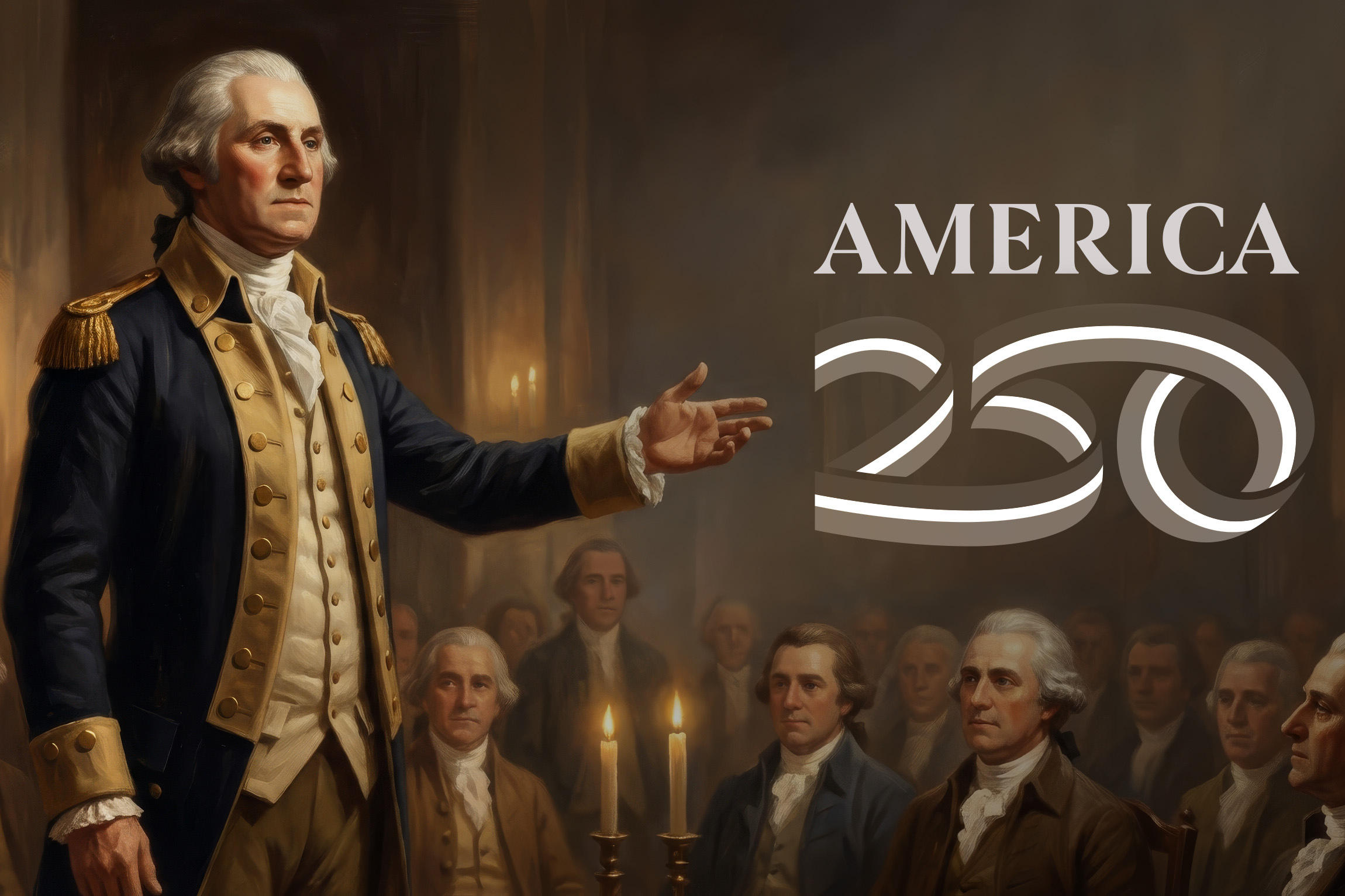
As America approaches its 250th birthday, we face a timely question: what kind of republic have we inherited, and can we keep it? The answer depends not on the state of our markets or military but on something more fragile: the character and conviction of our people. High school graduates in 2026 will enter adulthood during a moment of national reflection. Their understanding of liberty, self-government, and virtue may well determine the direction of our next quarter-millennium.
The American Revolution was not just another transfer of power. It was a radical affirmation of individual rights grounded in natural law and reason. Unlike the violent upheavals of France or Russia, our revolution was rooted in the consent of the governed and a moral appeal to the Creator. That founding moment must remain more than an anniversary. It should serve as an annual invitation to remember who we are and what principles bind us together.
A Unique Revolution for the People
Not all revolutions are created equal. Many replace one tyranny with another. The American Revolution was different. It rejected the divine right of kings, not to elevate new rulers, but to elevate the governed. The Founders, many of whom could have secured power or privilege, chose instead to bind themselves to the rule of law and a constitutional order that limited government itself.
Heritage Academy’s founding story is personal for our school community. Earl Taylor, the school’s founder and my father, spent decades teaching seniors that the American Revolution was not driven by terror or raw ambition, but by a commitment to liberty under moral self-restraint. In our recent podcast conversation, that same point came through again: leaders like George Washington resisted power rather than seized it. The goal was not to restructure society according to ideology, but to secure rights under the rule of law and a constitution that limits government.
Enlightenment Roots, Biblical Soil
The revolution of 1776 was born in what George Washington, in his June 8, 1783 Circular Letter to the States, called an “epocha when the rights of mankind were better understood and more clearly defined, than at any former period.” Thinkers like Locke, Montesquieu, and Blackstone helped articulate ideas that were already rooted in biblical tradition: that man is made in the image of God, endowed with inalienable rights, and accountable to a higher moral law.
As the Declaration of Independence makes plain, these rights were not granted by government, but secured by it. That concept, drawn from both Scripture and Enlightenment philosophy, remains foundational. But it only works if the people remain educated, virtuous, and vigilant. Without civic virtue, freedom decays into license, and government expands to fill the vacuum.
The Real Revolution: Moral Responsibility
In a February 13, 1818 letter to Hezekiah Niles, John Adams captured the essence of 1776: “The Revolution was in the minds and hearts of the people, a change in their religious sentiments of their duties and obligations.” It was not simply a military victory but a moral awakening. Citizens came to understand their rights and duties, not only to vote or speak freely, but to govern themselves wisely.
That moral component is indispensable. Freedom requires self-restraint. A republic assumes that individuals, families, and local institutions will cultivate character so that government doesn’t have to enforce it.
Education as the Guardian of Liberty
Public education once existed to transmit this moral and civic heritage. Today, that mission often gets buried beneath politics or pedagogy. But the primary object, as Washington argued in his Eighth Annual Message to Congress on December 7, 1796, should be civic formation: “a primary object of such a National Institution should be, the education of our Youth in the science of Government . In a Republic, what species of knowledge can be equally important? and what duty, more pressing on its Legislature, than to patronize a plan for communicating it to those, who are to be the future guardians of the liberties of the Country?” Government grounded in fixed principles, not shifting preferences.
Those principles are found in the Declaration and Constitution. They include the sanctity of individual rights, the necessity of limited government, and the belief in popular sovereignty. These are not abstract ideals but tested truths. And they work when taught and practiced.
The Role of Parents and the Home
Schools can support the republic, but they cannot sustain it alone. The home remains the seedbed of liberty. As numerous studies confirm, children perform better academically and morally when parents are actively engaged in their education. This is especially true for civic understanding.
When parents learn alongside their children, discussing founding principles, exploring current events through a constitutional lens, and modeling moral responsibility, they create a culture of liberty. As Earl Taylor noted, families who engage in these conversations often find their children becoming teachers of truth, not just students of it.
Choosing Self-Government
Freedom is not simply the absence of tyranny. It is the presence of self-control. To be self-governing is to take ownership of one’s thoughts, actions, and future. That is the American ideal: not a society of endless entitlements, but one where people are free to pursue happiness, restrained only by their duty to respect the rights of others.
As we mark the semi-quincentennial, let us renew our commitment to liberty rooted in virtue. Let us teach our children not just the mechanics of government but the miracle of self-government—one that must be renewed in every generation. And let us remember that the best birthday gift we can give America is a generation ready to inherit and improve the republic.
Further reading
- Circular Letter to the States (June 8, 1783) — Teaching American History (1783): https://teachingamericanhistory.org/document/circular-letter-to-the-states/
- John Adams to Hezekiah Niles, 13 February 1818 — National Humanities Center (2010): https://nationalhumanitiescenter.org/ows/seminars/revolution/Adams-Niles.pdf
- The Jubilee of the Constitution (discourse delivered April 30, 1839) — Library of Congress (1839): https://www.loc.gov/item/09021544/