
Parents often wonder how to teach children responsibility and care for other people. The writer J. E. McCulloch offered a reminder later shared by David O. McKay, an educator and church leader: His words ask us to give family life the attention it deserves. One place to begin is with work that matters to someone else. Give children a real part to play, teach them how to do it, and help them see the people their efforts serve.
In an American Classroom conversation, John and his wife, LaCinda Lewis, reflected on the lessons they learned from their parents and tried to pass on to their own eight children. Their stories offer a practical picture of education at home: children learn by reading and studying, but also by working alongside their families and serving their neighbors.
Give children work with a purpose
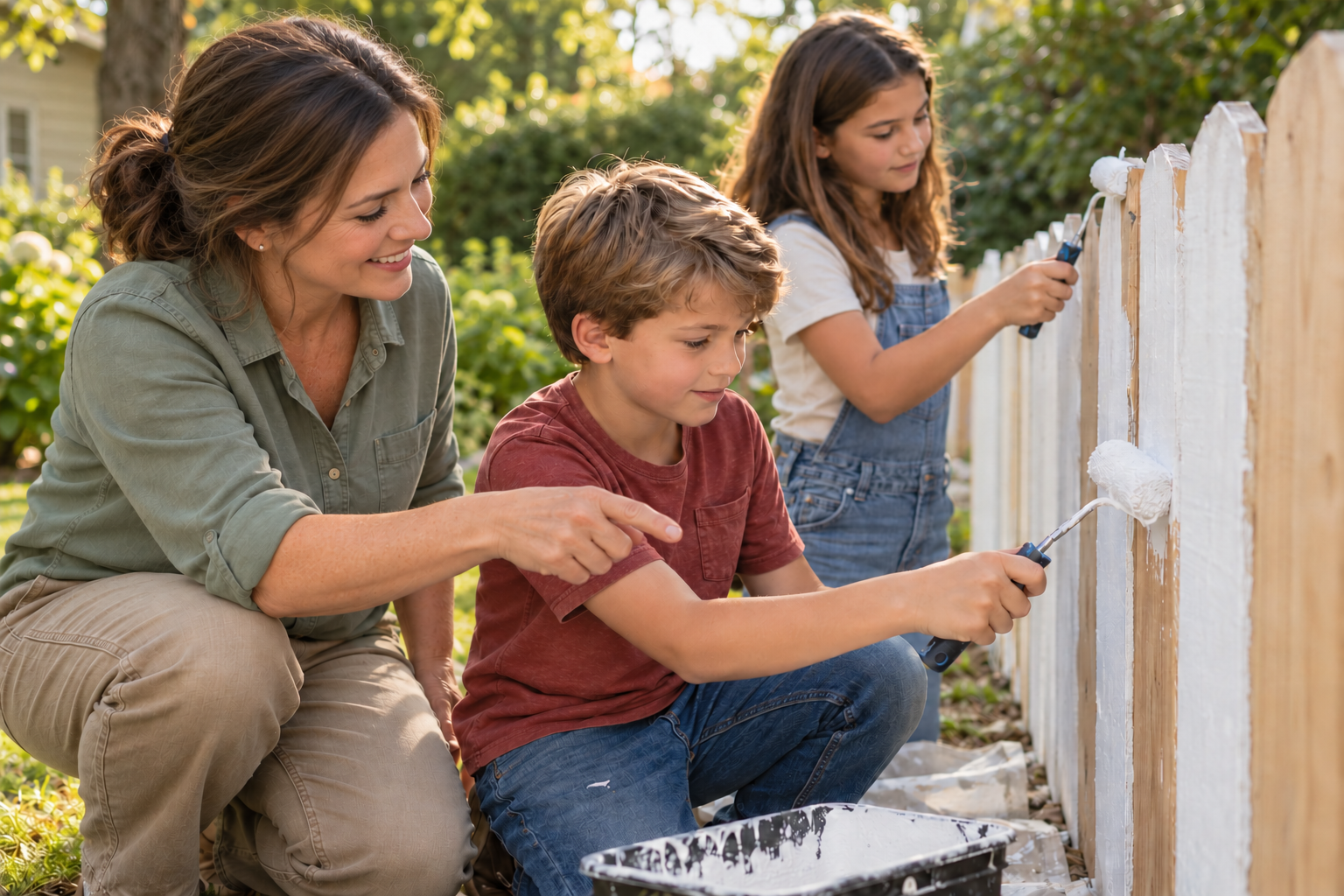
LaCinda described working with her grandchildren to paint a barn and fence. They learned how to use a roller, look over their work, and recognize when a second coat was needed. The project gave them a skill to practice and a visible contribution to make.
Most families do not have a barn to paint. They do have work that keeps a household going. A young child might help set the table or sort laundry. An older child might prepare part of dinner, take responsibility for a regular cleanup, or help plan what a family project will require. The right task depends on the child’s age, ability, and the family’s circumstances.
Make the purpose clear. A child setting the table is helping the family share a meal. A teenager learning to prepare one is making life easier for everyone who eats it. The work may be ordinary, but the person doing it has a part in the life of the household.
Teach the skill, then make room to practice
It is often faster to do a job ourselves. But if we want children to learn to do it, we have to leave them room to try. Show them what the task involves, work alongside them when needed, and let them take on more as they are ready. A crooked first attempt is a chance to teach the next step.
In , researchers found that children whose adult helper took over a puzzle spent less time trying a subsequent challenging task than children in the teaching or comparison conditions. The experiments measured behavior in a particular setting, not a lifetime of work habits. Still, they offer a useful reminder: help can guide a child without always taking the task out of the child’s hands.
That does not mean leaving children to struggle alone. It may mean holding the dustpan while they sweep, talking through a missed step, or asking what they think they could try next. Stay close enough to help, especially when safety is involved, and give them room to do what they can.
Practice following through
John shared a family phrase inspired by the words “finishers wanted.” He encouraged his children to finish what they started, and one of their daughters later put his version of the phrase on family T-shirts.
There is value in helping a child stay with a worthwhile task after the first burst of enthusiasm fades. A parent can make that possible by agreeing on a manageable commitment: finish clearing the table, complete the first coat of paint, or see a chosen activity through the period the family agreed on. When a child gets stuck, help identify the next step rather than simply repeating “finish it.”
Following through also requires judgment. A task may need to be adjusted if it is unsafe, beyond a child’s current ability, or creating more strain than the family expected. Parents can take a commitment seriously and still listen, make a change, or decide together when it is reasonable to stop.
Let service become personal
John’s job delivering his mother’s rolls brought him to the door of the person receiving them. He also helped his father deliver apples at Christmas and joined his family in picking fruit for people in need. Those experiences showed him service as something people did together, one person and one task at a time.
Families can look for opportunities that fit their time and resources. A child might help prepare a meal for someone, write a note, welcome a new classmate, or join a family member in a community project. Ask what would actually be helpful, and let children participate in a way that respects the person receiving the help. Service does not need to be expensive or elaborate to be worth doing.
Parents can talk about why they choose to help, too. In a , researchers found that parents’ volunteering and conversations about giving were associated with their children’s volunteering. The study cannot establish that those parental actions caused the children’s choices. It does suggest a reason to make our values visible and discuss them, rather than assume children will understand them without a conversation.
Connect responsibility with belonging
John also remembered that his parents often welcomed guests to Sunday dinner, including students from other parts of the world. He and LaCinda later made room in their own home for their children’s friends and other visitors. His memories point to another part of family education: children can learn to notice others by sharing a table and listening to their stories.
That kind of belonging matters when we ask children to contribute. Work together, but make time to enjoy one another, too. Let a child choose between two useful jobs when that is practical. Thank them for the work they do, and be willing to listen when something is difficult. Responsibility grows within a relationship that can hold both expectations and care.
Schools can provide similar opportunities. In , we looked at how students practice service and responsibility by helping their school community. At home, the setting is smaller, but the question is much the same: What can I do that will help the people around me?
Parents will make mistakes, and children will make their own choices. Harold B. Lee, a church leader, recalled a similar idea from Marvin J. Ashton while encouraging a discouraged family. Lee said, That hope belongs alongside the importance we place on the home.
This week, choose one task your child can take part in and one person your family can help. Explain the purpose, do the work together, and make time afterward to talk about what you noticed. No parent has to do everything at once. Each small act is an opportunity to learn, to serve, and to keep trying together.